Szeth's Assassination Campaign
The Way of KingsSzeth's Assassination Campaign is a politically engineered series of killings carried out by Szeth-son-son-Vallano under the authority of a concealed master. Its decisive significance lies in the gap between the campaign's immediate form—one assassin moving from target to target—and its intended effect: the destabilization of kingdoms, the destruction of alliances, and the prevention of Dalinar Kholin's attempt to unite the Alethi highprinces. Szeth's personal obedience makes the operation possible, but the campaign's larger logic belongs to the people who direct him from behind masks, chains, and written orders.
The Campaign's Hidden Command Structure
The campaign is revealed through coercion rather than open declaration. When Szeth encounters a masked figure, the meeting is marked by the sudden appearance of another severed head: Makkek's head rolls across the floor, confirming that the people who have taken control of the operation are willing to kill even those within its immediate circle. The violence is not merely a threat in the abstract; it is delivered as a physical message placed before Szeth.
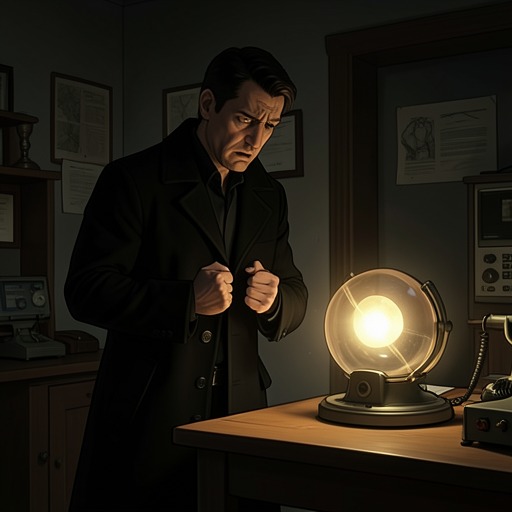
The masked figure carries a gemstone suspended from a chain around his fingers and holds Szeth's Oathstone beside it. The Oathstone is the instrument that binds Szeth's service, so its possession establishes the encounter's governing hierarchy. Szeth dismisses his Shardblade, kneels, and asks for his orders. His obedience is therefore not presented as ordinary employment or political allegiance. It is a compelled relationship in which control over the Oathstone determines who may command him.
The campaign's orders are written rather than explained in a full political conversation. A sheet of paper lies beside Makkek's head, placed on a plate to contain the blood, and Szeth finds roughly two dozen names written in the warrior's script of his homeland. Several entries include instructions describing how the victims are to be killed. The list transforms isolated assassination into a program: it supplies targets, methods, sequence, and an administrative appearance that contrasts sharply with the brutality of the corpses surrounding it.
Targets and Intended Political Effect
Szeth immediately recognizes that the list reaches far beyond ordinary criminal or military targets. It includes six highprinces, a Selay gerontarch, and the king of Jah Keved. The selection identifies the campaign as an attack on political authority across national and regional boundaries, not simply an Alethi vendetta. The breadth of the names also explains why Szeth understands the operation as capable of producing consequences much larger than any individual death.
Szeth states that the campaign will cause chaos, infighting, war, confusion, and pain on a scale rarely known to the world. The masked agents do not dispute this forecast. Instead, the chained gemstone flashes and a wall vanishes into smoke, revealing the figure's possession of a Soulcaster and reinforcing the impression that the operation is backed by resources beyond Szeth's own extraordinary abilities. The master wants tactics resembling those Szeth used in Alethkar years earlier, and promises further instructions after the work is complete.
The campaign thus combines assassination with psychological and institutional warfare. Each killing removes a person, but the cumulative target list is designed to make surviving rulers distrust one another, compete for power, and lose the ability to coordinate. The operation's objective is not simply to replace particular leaders. It is to make political unity itself difficult to achieve.
Szeth as Weapon and Witness
Szeth's role is defined by a severe contradiction. He possesses the skill to move through guarded places, wield a Shardblade, and perform killings that ordinary soldiers could not accomplish, yet he has little authority over the purpose to which that skill is applied. The order that he has stopped wasting his talent sounds like praise, but it is also a reduction of him to an instrument whose value lies in destructive efficiency.
His reaction to the list shows that he understands its moral and historical consequences. He does not mistake the names for a routine assignment: he identifies the victims as some of the most powerful people in the world and anticipates the wars and suffering that will follow. His awareness does not free him. The Oathstone, the masked command, and his established identity as Truthless force a division between recognition and action: Szeth can perceive the disaster he is being made to create while remaining bound to carry it out.
That division is emphasized when Szeth later appears in Kharbranth disguised as a porter. He carries a sack of grain through the steep, crowded streets, keeping his eyes down partly to resemble a worker and partly to avoid the gaze of the sun, which he associates with judgment and shame. The ordinary laborer's disguise places a quiet public surface over the hidden campaign. Kharbranth's peaceful morning, with fishermen preparing their nets and porters moving through the city, becomes the setting for an assassin who fears exposure not only because of his profession but because of the shame attached to his condition.
Dalinar as the Campaign's Critical Target
The campaign reaches its clearest political purpose when Taravangian adds Dalinar Kholin to the list. Taravangian explains that dying people have spoken of a vision that began around the time Gavilar Kholin investigated the Shattered Plains, and claims that their final words may help save the world. He accepts the accusation that he is a monster, but defines himself as a monster who will save the world. This self-justification supplies the campaign with its governing paradox: mass murder is presented as a form of preservation.
Taravangian orders Szeth to go to the Shattered Plains and kill Dalinar quickly, before Dalinar can unite the Alethi highprinces. The command identifies Dalinar not merely as another name among many but as the political obstacle whose survival threatens the entire design. The demanded brutality suggests that assassination must also discredit, terrify, or destabilize its target; Dalinar's death is meant to prevent a coalition, while the manner of death is meant to magnify the resulting disorder.
The order also creates a sharp contrast with Dalinar's own conduct. In a dispute over Sadeas's bridge policy, Dalinar invokes the Codes, insisting that a general should not ask a man to do anything he would not do himself. He challenges Sadeas over bridges that send unarmored, unshielded men into combat while their commanders remain protected by Plate. Elsewhere, Dalinar asserts control over his guards to prevent them from answering Elhokar's pleas, demonstrating that loyalty and command can be used both to protect a sovereign and to constrain him. Against this background, the assassination campaign attacks a figure attempting to organize power through personal responsibility and disciplined allegiance.
Consequences and Narrative Significance
The campaign turns private coercion into international danger. Its list includes leaders whose deaths could trigger succession crises, rivalries, or war, while the later order against Dalinar specifically threatens the possibility of Alethi unity. The operation therefore functions as a hidden engine beneath visible political conflict: public disputes over armies, bridges, kingship, and loyalty can be intensified by deaths whose true author remains concealed.
Its horror also depends on delayed understanding. The reader first encounters a corpse, then the Oathstone, then the written names, and only later receives Taravangian's explanation of the campaign's intended political purpose. Each revelation enlarges the scale of the previous one. What looks like a single act of violence becomes a system; what looks like a system becomes a plan to reshape the political world; and what looks like a plan to save the world is exposed as an argument that catastrophe may be administered in advance.
The campaign's central irony is that its supposed salvation depends on making the world less capable of solidarity. Taravangian fears Dalinar's power to unite the Alethi highprinces, so he employs Szeth to preserve his own larger design through murder, secrecy, and confusion. Szeth remains the visible hand, but the campaign's true subject is the political use of a person who has been stripped of ordinary freedom and made to carry out orders whose consequences he understands better than those who treat him as a weapon.